
Disclaimer: This article is general information only and not medical advice. If you have severe pain, deformity, numbness, or can’t weight-bear, seek urgent medical care.
Sprain vs fracture: the quick difference
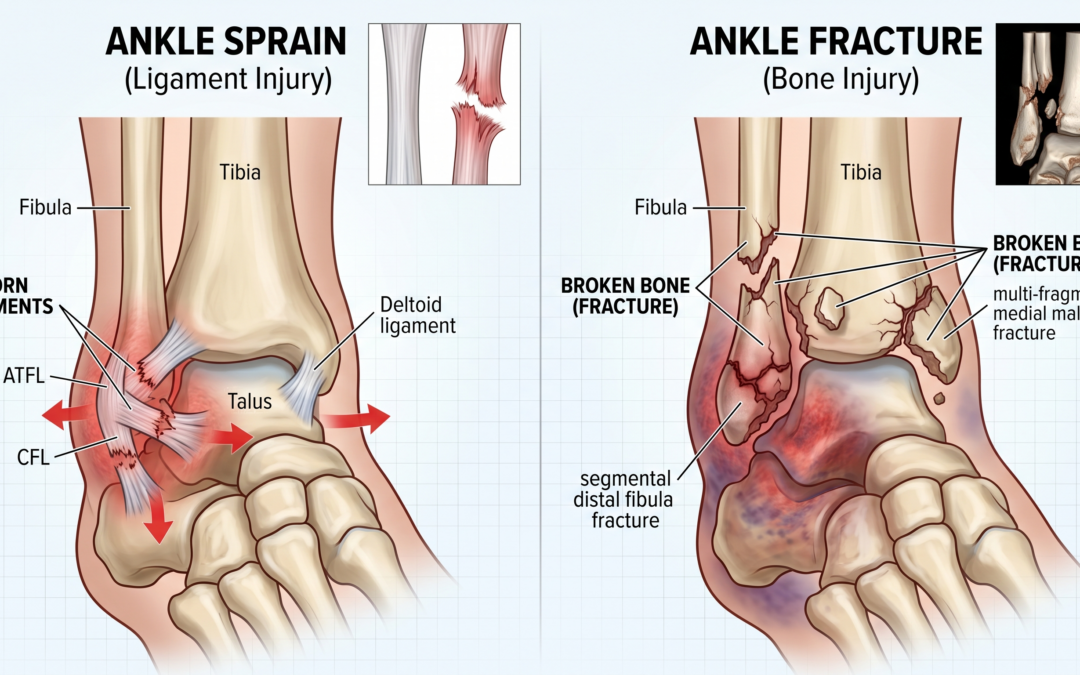
An ankle sprain is an injury to ligaments (the bands that stabilise the joint). An ankle fracture is a break in one of the ankle bones (most commonly the fibula, tibia, or talus). The symptoms can overlap, which is why an assessment and often an X‑ray are important.
Signs it might be a fracture (red flags)
- Inability to walk or take four steps after injury
- Bone tenderness along the ankle bones (not just the soft tissue)
- Obvious swelling and bruising that rapidly worsens
- Deformity or the ankle looks “out of place”
- Numbness/tingling, cold foot, or colour change
Clinicians often use the Ottawa Ankle Rules to decide whether an X‑ray is recommended.
Signs it might be a sprain
- Pain mainly over the ligaments (front/outside of ankle) rather than the bone
- You can still walk, even if it’s uncomfortable
- Swelling is present but improves over a few days with rest and support
Why getting it right matters
A missed fracture can lead to ongoing pain, delayed healing, or problems with joint alignment. On the other hand, a severe sprain can also require structured rehab and sometimes immobilisation. The right diagnosis helps guide:
- Whether you need a boot/cast
- Whether you can weight-bear
- When to start physiotherapy
- Expected healing times
What to do in the first 48 hours
- Protect the ankle (brace/boot if you have one)
- Rest and avoid painful activity
- Ice 10–15 minutes at a time (skin protection)
- Compression with a bandage if tolerated
- Elevation above heart level when possible
When to book an assessment (Brisbane / Gold Coast)
If you have significant pain, swelling, difficulty walking, or you’re unsure whether it’s a fracture, an assessment with imaging can help. You can also review our clinic locations:
FAQ
Can you walk on a fractured ankle?
Sometimes yes, especially with smaller fibula fractures – but walking doesn’t rule out a break. If pain is significant or bone tenderness is present, get assessed.
Do I always need an X‑ray?
Not always. Clinicians use decision tools like the Ottawa Ankle Rules plus clinical judgement to decide when imaging is recommended.
How long does it take to heal?
Sprains vary from a couple of weeks to several months depending on severity. Many fractures take ~6 weeks for bone healing, with rehab often continuing after that.