
Wrist Fractures
A wrist fracture is one of the most common bone injuries, affecting people of all ages — from children falling off playground equipment to older adults after a simple trip or fall. They most often happen from falling onto an outstretched hand. The type of fracture depends on which bone is affected and how it breaks:
- Distal radius fracture — the most common wrist fracture; a break at the bottom of the forearm just above the wrist
- Colles’ fracture — the wrist bends backward on impact, causing the wrist to appear bent or deformed
- Smith’s fracture — similar to a Colles’ but the wrist bends forward; often from falling on a bent wrist
- Barton’s fracture — the break extends into the wrist joint itself
- Ulnar styloid fracture — a break at the small bony bump on the little-finger side of the wrist; often happens at the same time as a distal radius fracture
- Scaphoid fracture — felt as deep pain near the thumb; a different type of wrist injury that needs separate treatment.
Symptoms of Wrist Fractures
Common signs or symptoms of a wrist fracture include:
- Immediate pain that worsens from moving the wrist after an injury
- Bruising, swelling or visible deformity around the wrist
- Difficulty moving or using the wrist
- Numbness or tingling sensation in the hand

Risk Factors

Some factors that increase the risk of wrist fractures include:
- Osteoporosis — reduced bone density makes fractures more likely from even minor falls; particularly common in post-menopausal women
- Age — older adults fall more easily and heal more slowly; children are also at higher risk due to active play
- Sports and physical activity — contact sports, cycling, motocross and similar activities increase fall risk
- Poor balance or coordination — increases the likelihood of falling onto an outstretched hand
- Previous fractures — a history of fractures may indicate lower bone density
How we diagnose wrist fractures
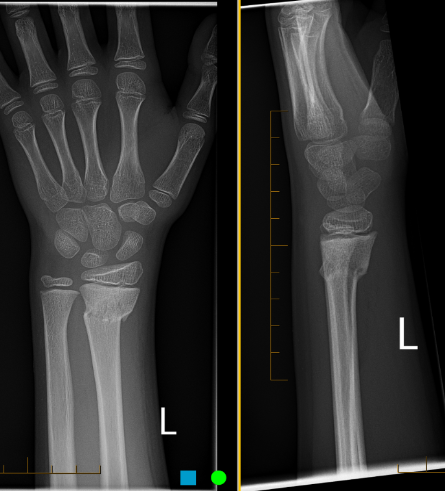
Wrist fractures can be difficult to examine, especially if they don’t show the typical symptoms that are clearly visible. Our wrist fracture diagnostic process typically involves:
- Physical examination by orthopaedic doctor or fracture specialist
- Detailed medical history
- X-rays from different angles to ensure nothing is missed
- CT scans or MRI scans for complex cases where suspected wrist injuries may not be visible on x-rays
Wrist Fracture Treatment
Most wrist fractures are treated without surgery. The right approach depends on the fracture type, displacement, and your age and activity level.
- Undisplaced fractures — immobilisation with a removable cast or splint is usually all that’s needed
- Displaced fractures — the bone may need repositioning first, sometimes under local anaesthetic, before casting
- Unstable or Smith’s fractures — more likely to require surgical fixation with a plate and screws
For most patients, non-surgical treatment involves:
1. Immobilisation
- Traditional or waterproof plaster casts
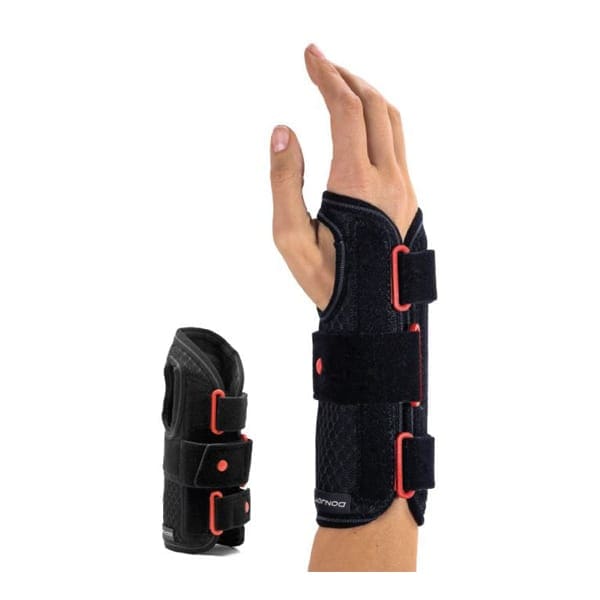
- Custom-moulded splint, removable casts and Exos wrist braces
2. Pain Management
- Over-the-counter pain medication
- Ice and elevation in the first 48 hours
- Movement modification advice
3. Rehabilitation
- Guided exercise and physiotherapy
- Return to activity planning

Wrist Fracture vs Wrist Sprain — How to Tell the Difference
Both injuries cause pain, swelling and difficulty moving the wrist, which makes them hard to tell apart without imaging. As a general guide:
- Sprains — pain and swelling but the wrist still has some movement; usually from a minor twist or fall
- Fractures — more intense pain, swelling and tenderness directly over the bone; movement is significantly limited or impossible
The only reliable way to confirm a fracture is an X-ray. If you’re unsure, don’t mistake an untreated fracture for a sprain that can lead to poor healing and long-term complications.

Do you need surgery?
Our orthopaedic surgeon will assess you promptly if your fracture requires a surgical intervention. Surgical treatment may be needed for:
- Severely displaced fractures
- Open fractures (where bone has broken through the skin)
- Fractures involving joint surfaces
- Unstable fractures
- Multiple fragment fractures
Wrist Fracture Recovery
Most patients, including children, can expect 6-8 weeks in a cast or splint. Bone remodelling can take 3-6 months. Patients can commence light activities in 6 weeks to 3 months, and make a full return to sports in 4-6 months. Recovery from a wrist fracture typically involves several phases:
Initial Phase (0-6 weeks):
- Wrist Fracture Immobilisation
- Wrist Pain and swelling management
- Regular monitoring and X-rays
- Basic finger exercises to maintain circulation
Middle Phase (6-12 weeks):
- Transition to removable splint (mostly for the elderly or when underlying arthritis is present)
- Gentle movement exercises and gradual increase in activities
- Physiotherapy sessions
Final Phase (3-6 months):
- Progressive strengthening
- Return to normal activities
- Sport-specific rehabilitation if needed
- Ongoing exercises for maintenance
How can I book an appointment at the Fracture Clinic?
You can call their phone number or make an appointment online via their website. The clinic is open from 8 a.m. to 4 p.m., Monday through Friday.
Do you accept insurance?
We work with multiple health insurance providers. We offer Medicare rebates where applicable and can assist you in understanding your potential coverage. We recommend:
-
Checking your specific insurance policy for physiotherapy, or orthopaedic specialist coverage
-
Bringing your Medicare card and private health insurance details to your consultation
-
Consulting with our team for precise rebate information, especially if you have DVA or WorkCover coverage
We are committed to transparent pricing and we will provide a comprehensive breakdown of potential costs and rebates during your initial consultation. For patients with eligible Medicare, DVA, WorkCover and/or private health insurance, out-of-pocket expenses can be significantly reduced.
